
UK businesses face an expanding web of IT compliance requirements that extend far beyond basic data protection. Understanding and implementing these regulations is essential for avoiding penalties, protecting your business reputation, and maintaining customer trust.
This guide provides practical steps to navigate the complex compliance landscape, implement necessary controls, and prepare for upcoming regulatory changes.
Understanding Core UK IT Regulations
UK GDPR and Data Protection Act 2018
Every UK business processing personal data must comply with UK GDPR requirements. This includes implementing privacy by design, conducting data protection impact assessments, and maintaining records of processing activities.
Designate a data protection officer if required by your business size or processing activities. Document your legal basis for processing personal data and establish procedures for handling data subject requests within required timeframes.
Network and Information Systems (NIS) Regulations
The NIS Regulations apply to operators of essential services and digital service providers. These regulations establish baseline cybersecurity requirements including incident reporting obligations.
Identify whether your organization falls under NIS scope. Operators of essential services in energy, transport, banking, financial market infrastructures, health, drinking water supply, and digital infrastructure must comply with specific security and incident reporting requirements.
Payment Card Industry Data Security Standard (PCI DSS)
Any organization processing, storing, or transmitting credit card information must maintain PCI DSS compliance. This applies regardless of transaction volume or business size.
Complete annual self-assessment questionnaires appropriate to your merchant level. Implement required security controls including network segmentation, access controls, and regular vulnerability scanning.

Essential Compliance Areas to Address
Access Control Implementation
Establish role-based access control systems that limit user permissions to necessary functions. Implement multi-factor authentication for all administrative accounts and sensitive system access.
Conduct quarterly access reviews to remove unnecessary permissions. Document all privileged user activities and establish approval processes for access modifications.
Data Protection Measures
Deploy data loss prevention tools to monitor and control sensitive data movement. Encrypt data both at rest and in transit, particularly for cloud storage and email communications.
Establish data retention policies that specify how long different types of data are stored. Implement secure deletion procedures for data that has reached end of life.
Incident Response Procedures
Develop documented incident response plans that include identification, containment, eradication, and recovery phases. Assign specific roles and responsibilities to team members for different incident types.
Establish communication procedures for notifying regulators, customers, and other stakeholders within required timeframes. Practice incident response procedures through regular tabletop exercises.
Monitoring and Audit Requirements
Deploy continuous monitoring systems that track user activities, system changes, and security events. Generate regular compliance reports that demonstrate adherence to applicable regulations.
Schedule annual third-party security assessments to validate your compliance posture. Maintain audit trails that provide evidence of security control effectiveness.
Step-by-Step Implementation Strategy
Phase 1: Assessment and Gap Analysis
Begin by cataloguing all systems, applications, and data repositories within your organization. Identify which regulations apply to each system based on data types and business functions.
Conduct risk assessments to prioritize compliance gaps based on potential impact and likelihood of occurrence. Document findings and create remediation timelines for identified issues.
Phase 2: Policy Development
Create comprehensive security policies that address acceptable use, data handling, and incident response procedures. Ensure policies align with applicable regulatory requirements and business objectives.
Establish governance structures that assign accountability for compliance activities. Define roles and responsibilities for security policy enforcement and maintenance.
Phase 3: Technical Controls Implementation
Deploy security technologies that support compliance objectives including firewalls, antivirus systems, and monitoring tools. Configure systems according to security best practices and regulatory guidance.
Implement backup and disaster recovery systems that ensure business continuity during security incidents. Test recovery procedures regularly to verify effectiveness.
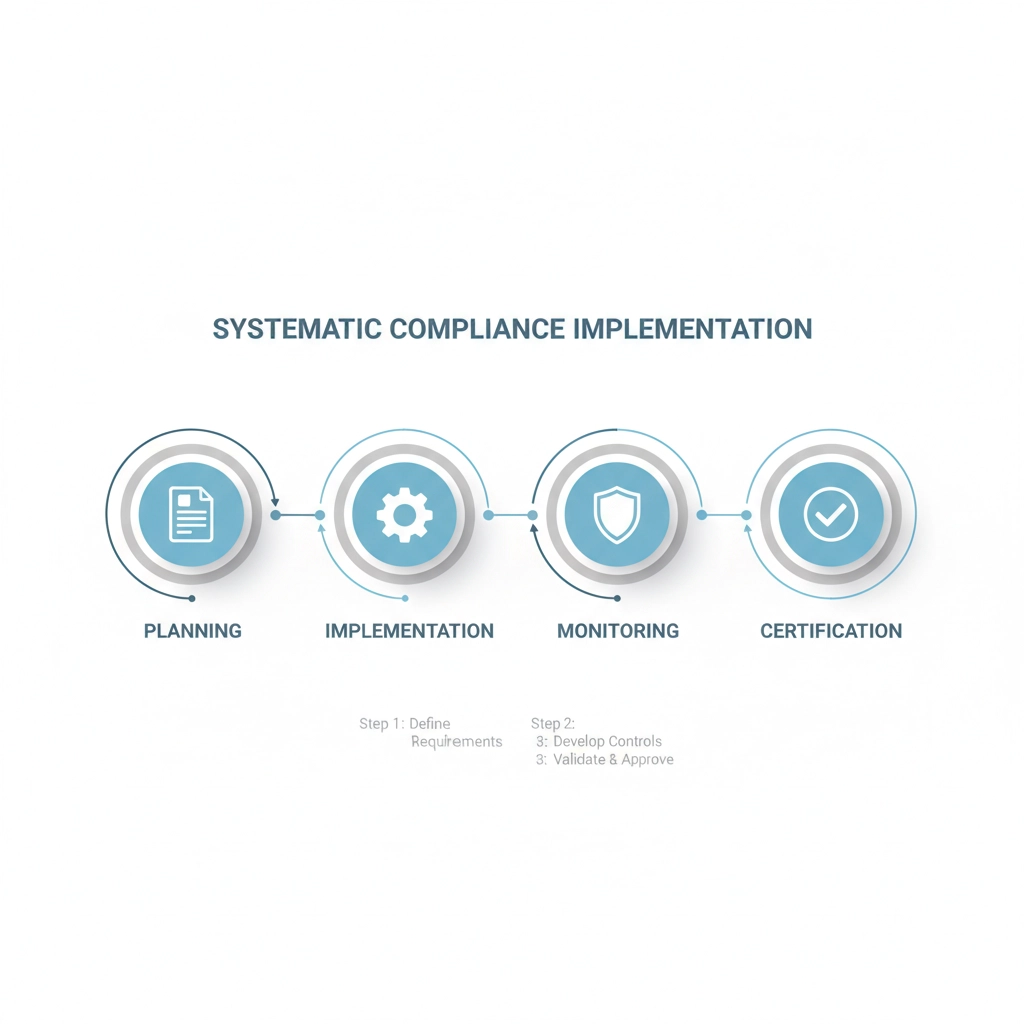
Phase 4: Training and Awareness
Develop security awareness training programs that educate employees about their compliance responsibilities. Include specific guidance on recognizing and reporting security incidents.
Conduct regular training sessions that update staff on new threats and regulatory changes. Measure training effectiveness through assessments and simulated security exercises.
Preparing for Upcoming Regulatory Changes
Cyber Security and Resilience Bill 2025
The UK government is introducing expanded cybersecurity obligations that will affect more organizations than current NIS regulations. This legislation will include Managed Service Providers and other digital services previously outside regulatory scope.
The new bill establishes clearer security requirements that organizations must implement based on risk assessments. Requirements include embedding cybersecurity throughout operations and supply chains.
Review your current security posture against anticipated requirements. Begin implementing stronger security measures that demonstrate appropriate and proportionate protection based on your risk profile.
Enhanced Enforcement Powers
Regulators will receive expanded information-gathering capabilities to assess security practices proactively. The Information Commissioner's Office will gain authority to determine critical digital services and conduct security assessments.
Prepare for increased regulatory scrutiny by maintaining comprehensive documentation of security practices. Ensure your organization can demonstrate compliance through audit trails and policy implementations.
Penalty Structure Changes
New penalties may be comparable to or stricter than current NIS regulations, with multiple enforcement mechanisms including fines, notices, audits, and injunctions. Repeated non-compliance will attract harsher consequences.
Calculate potential penalty exposure based on your organization's revenue and regulatory scope. Invest in compliance measures that reduce penalty risk and demonstrate good faith security efforts.

Sector-Specific Considerations
Financial Services
Financial organizations face additional requirements including the Bank of England's operational resilience framework and FCA cyber security guidance. These requirements include business continuity planning and third-party risk management.
Healthcare Organizations
Healthcare providers must comply with NHS Digital requirements and may need to meet HIPAA standards if handling U.S. patient data. Implement additional safeguards for clinical and personal health information.
Technology Companies
Software providers and digital service companies should prepare for expanded obligations under the Cyber Security and Resilience Bill. Focus on secure development practices and customer data protection.
Building Long-term Compliance Success
Continuous Improvement Approach
Treat compliance as an ongoing process rather than a one-time project. Regularly review and update security controls based on evolving threats and regulatory changes.
Establish metrics that measure compliance effectiveness including incident response times, security control performance, and audit findings. Use these metrics to guide improvement investments.
External Support and Resources
Consider engaging IT consulting specialists who understand UK regulatory requirements. External expertise can help identify compliance gaps and implement appropriate controls efficiently.
Participate in industry forums and regulatory guidance sessions that provide updates on compliance expectations. Subscribe to regulatory alerts that notify you of upcoming changes.
Technology Investment Strategy
Invest in security technologies that support multiple compliance requirements simultaneously. Choose solutions that provide audit capabilities, automated reporting, and scalable protection.
Plan technology upgrades that maintain compliance while supporting business growth. Ensure new systems include security controls from initial deployment rather than retrofitting protection later.
Maintaining IT compliance requires sustained effort, appropriate investment, and proactive planning. Start with fundamental requirements like data protection and access controls, then expand coverage as your organization grows and regulations evolve.
Regular assessment, employee training, and technology investments create a foundation for long-term compliance success. Stay informed about regulatory changes and adjust your approach accordingly to maintain protection and avoid penalties.
Related Service: Manufacturing IT Services — Learn how Bailey Associates can help your manufacturing business.
