
Manufacturing CEOs face a critical decision point. By 2027, over 80% of ERP systems will be cloud-deployed, and companies still running legacy on-premise solutions risk falling behind competitors who leverage AI, IoT integration, and real-time data analytics. The question isn't whether to modernize your ERP system: it's whether you're asking the right strategic questions before making that investment.
Your next Manufacturing IT strategy workshop should address these seven fundamental questions. Each one directly impacts your bottom line, operational efficiency, and competitive positioning in an increasingly digital manufacturing landscape.
Question 1: Does Our Current ERP Architecture Align with 2027 Industry Projections?
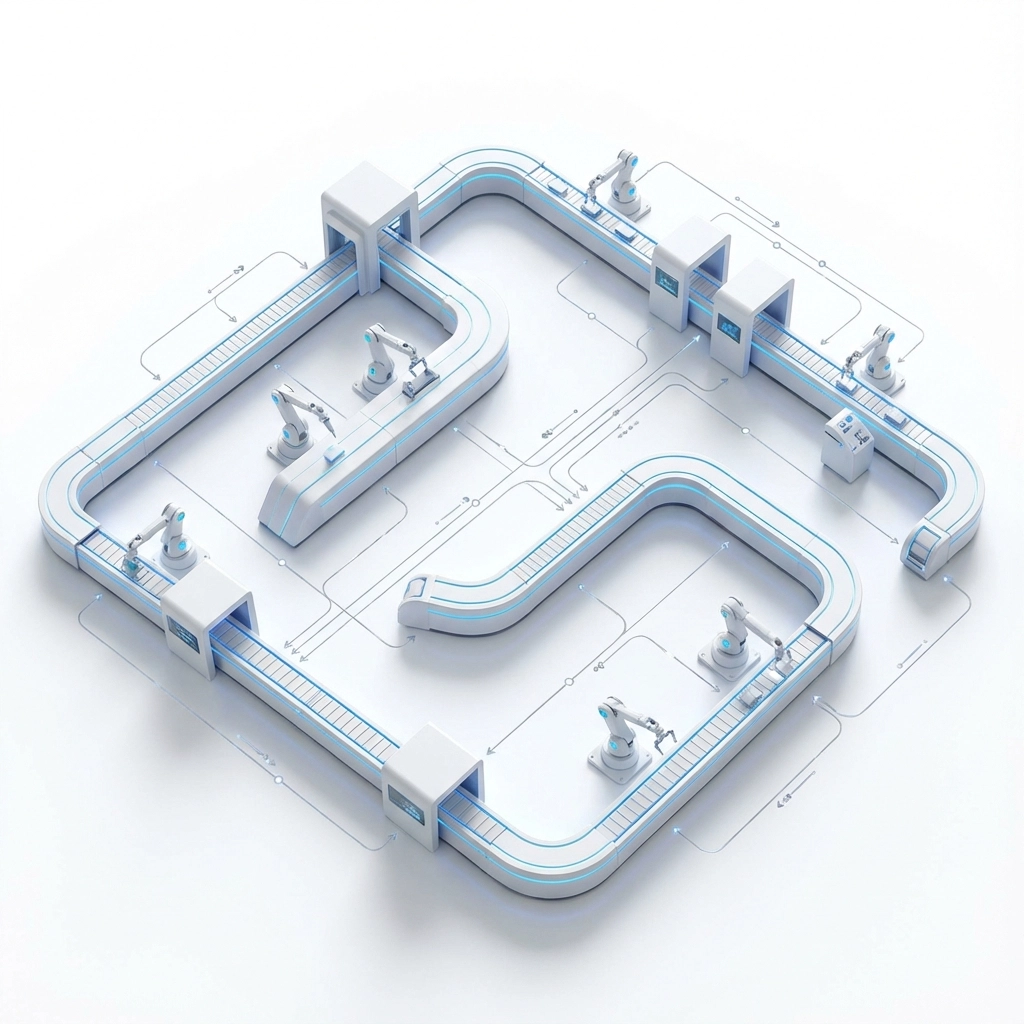
Start your manufacturing IT strategy evaluation by examining deployment models. The data is clear: cloud ERP adoption will dominate the market, with the global cloud ERP market expanding from $64.7 billion in 2022 to $130 billion by 2027.
Assess whether your current on-premise system creates competitive disadvantages. Cloud-based solutions offer faster implementation timelines, lower upfront capital requirements, and automatic updates that keep your system current with regulatory changes. However, manufacturing environments often require hybrid architectures that maintain critical production systems on-premise while leveraging cloud capabilities for analytics and reporting.
Review your disaster recovery capabilities, scalability limitations, and integration complexities. On-premise systems typically require significant IT infrastructure investment and dedicated personnel for maintenance and updates. Cloud solutions shift this responsibility to your ERP provider, allowing your internal team to focus on strategic initiatives rather than system administration.
Question 2: Can Our ERP Leverage AI and Machine Learning for Operational Excellence?
Manufacturing generates vast amounts of data from production lines, quality control systems, and supply chain operations. Your ERP system should transform this data into actionable insights through AI and machine learning capabilities.
Evaluate whether your current system supports predictive analytics for maintenance scheduling, demand forecasting, and inventory optimization. By 2027, nearly all ERP software providers will incorporate AI functionality. Companies already using AI-driven automation report potential cost reductions of up to 30% over three years.
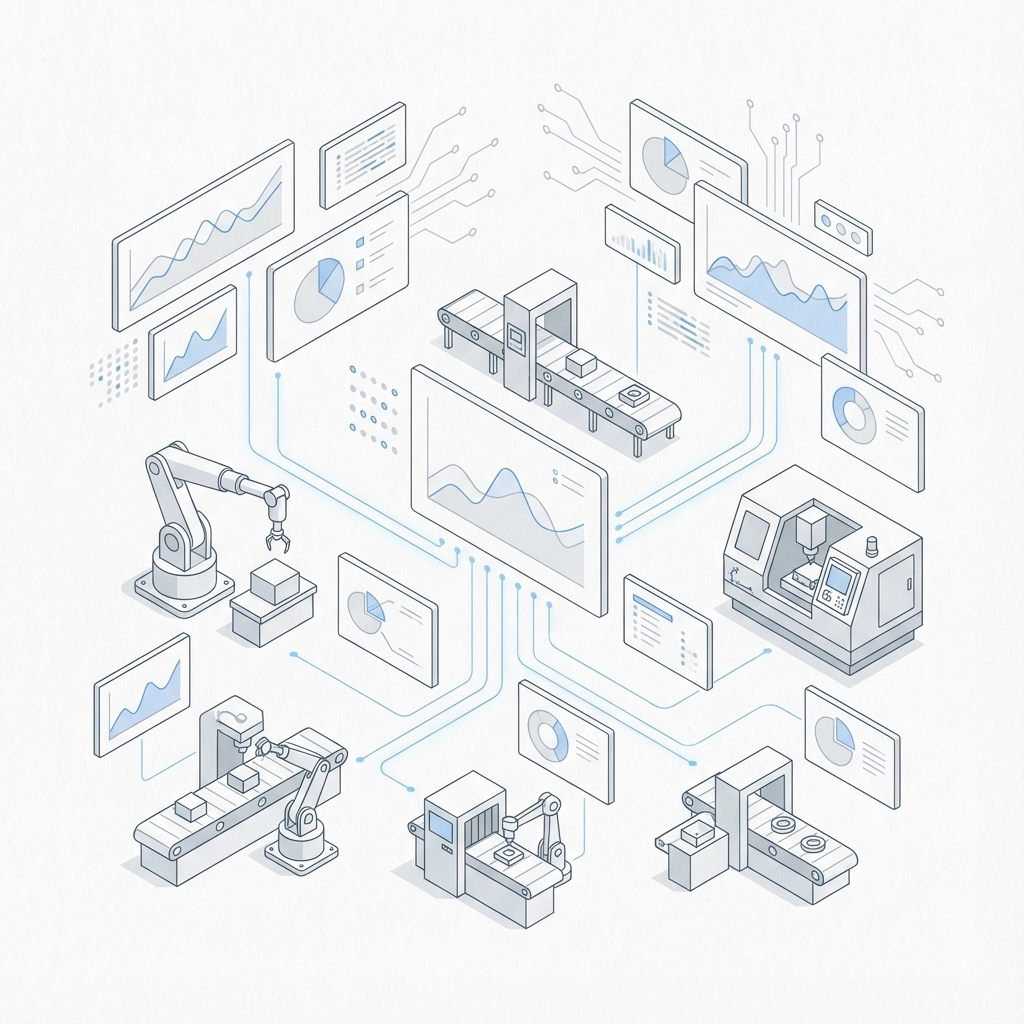
Examine specific AI applications relevant to manufacturing:
- Predictive maintenance algorithms that reduce unplanned downtime
- Quality control systems that identify defects before products leave the facility
- Supply chain optimization that adjusts procurement based on demand patterns
- Production scheduling that optimizes resource allocation and delivery commitments
Your ERP consulting manufacturing evaluation should include hands-on demonstrations of these AI capabilities with your actual production data.
Question 3: Does Our System Support Manufacturing-Specific Workflows?
Generic ERP systems fail in manufacturing environments because they lack industry-specific functionality. Only 3% of businesses successfully use standard, out-of-the-box ERP configurations without customization.
Verify that your ERP includes comprehensive manufacturing modules:
- Bill of Materials (BOM) management with version control and change tracking
- Shop floor control systems that monitor production in real-time
- Manufacturing Execution Systems (MES) integration for quality assurance
- Capacity planning tools that account for machine availability and workforce scheduling
- Regulatory compliance features specific to your industry sector
Review how the system handles complex manufacturing scenarios like make-to-order production, multi-level BOMs, and batch tracking for quality control. Your ERP should accommodate unique manufacturing processes without extensive customization that increases costs and complexity.
Question 4: How Effectively Does Our ERP Integrate with IoT for Real-Time Operations?
Modern manufacturing relies on connected devices throughout production facilities. Your ERP system must integrate seamlessly with IoT sensors, machine controllers, and automated systems to provide real-time operational visibility.
Evaluate IoT integration capabilities across these areas:
- Machine monitoring for performance metrics and maintenance alerts
- Inventory tracking through RFID and barcode scanning systems
- Environmental monitoring for temperature, humidity, and safety compliance
- Energy consumption tracking for sustainability reporting and cost management
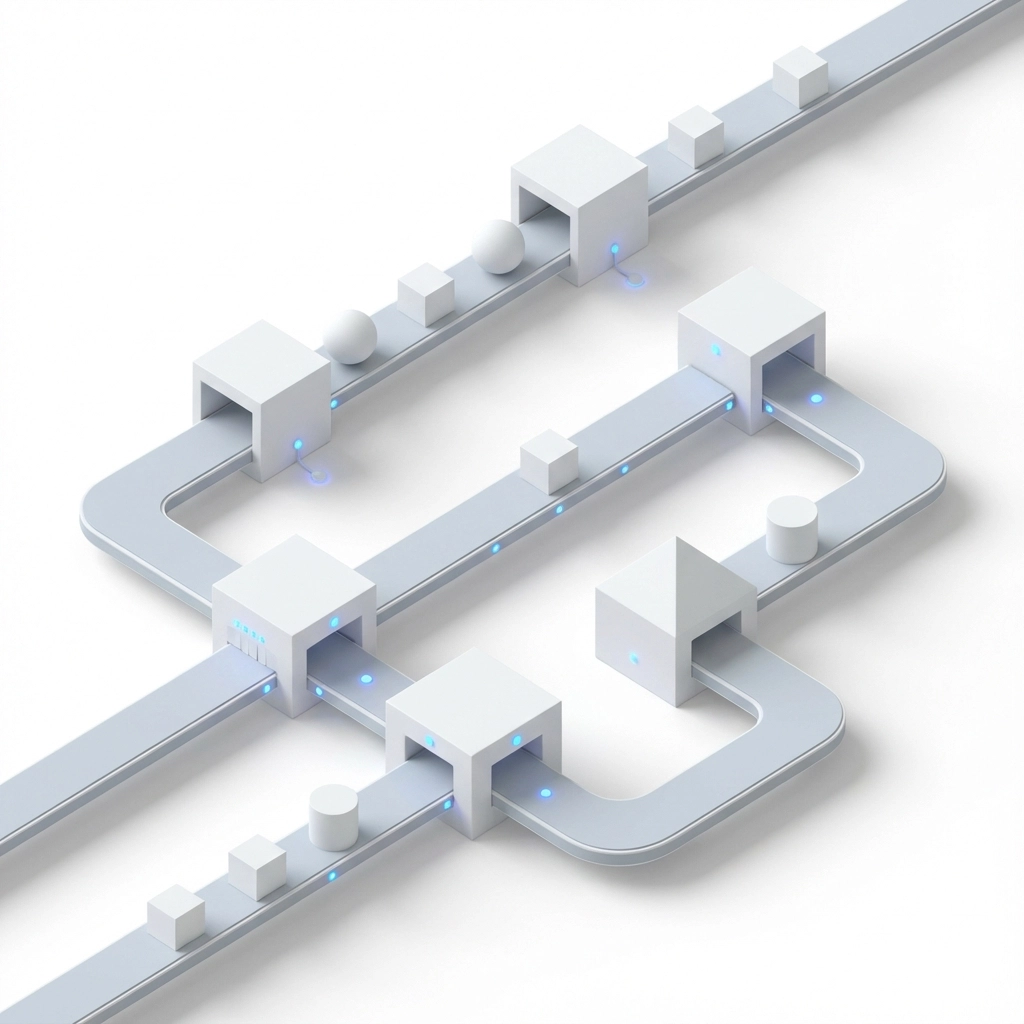
The integration should be bidirectional: your ERP receives data from IoT devices and sends commands back to automated systems. This connectivity enables advanced manufacturing concepts like digital twins, where virtual representations of physical assets provide simulation and optimization capabilities.
Question 5: What Are the True Costs and Implementation Timelines?
Manufacturing ERP implementations often exceed budgets and timelines due to inadequate planning and unrealistic expectations. Your workshop should establish realistic cost projections and implementation schedules.
Break down total cost of ownership into these categories:
- Software licensing or subscription fees
- Implementation and customization costs
- Data migration and integration expenses
- Training and change management programs
- Ongoing maintenance and support fees
Cloud-based solutions typically offer faster implementation timelines: often 6-12 months compared to 18-24 months for on-premise systems. However, complex manufacturing environments may require longer implementation periods regardless of deployment model.
Consider phased implementation approaches that prioritize critical business functions first. This strategy reduces risk and allows your team to gain experience with the new system before rolling out additional modules.
Question 6: Can the System Scale with Our Growth Plans?
Manufacturing companies often outgrow their ERP systems as they expand into new markets, acquire facilities, or add product lines. Your manufacturing IT strategy should anticipate future requirements and ensure scalability.
Evaluate multi-entity capabilities for companies with multiple locations or subsidiaries. The system should support:
- Standardized processes across all facilities while allowing location-specific customizations
- Multi-currency and multi-language functionality for international operations
- Consolidated reporting that provides enterprise-wide visibility
- Role-based access controls that maintain security across distributed teams
Review user licensing models to understand how costs scale with business growth. Some vendors charge per user, while others use transaction-based or revenue-based pricing models that may be more cost-effective for rapidly growing companies.
Question 7: Does Our ERP Platform Support Emerging Technologies?
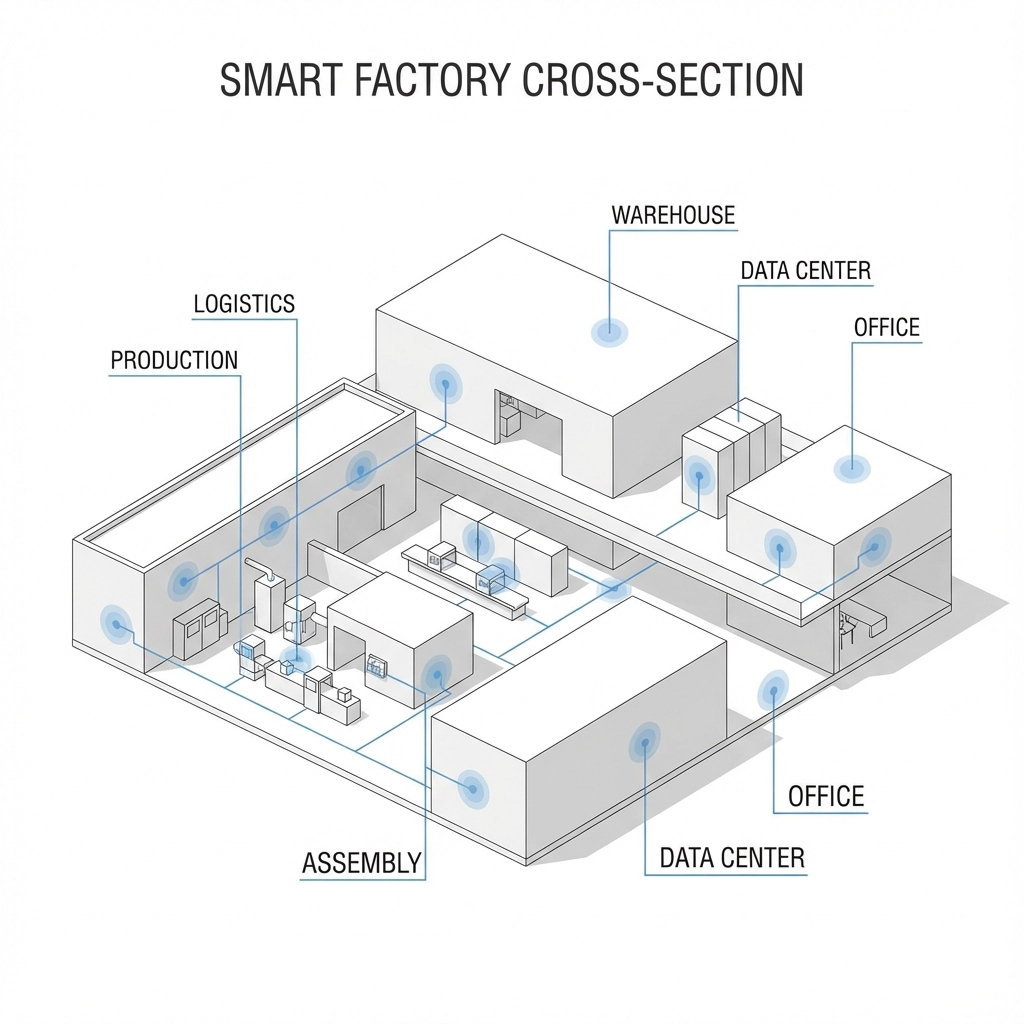
Future-ready manufacturing ERP systems must integrate with emerging technologies that will define competitive advantage in the coming years.
Assess compatibility with these technologies:
- Digital Twin Technology: Virtual representations of physical assets that enable simulation, optimization, and predictive analysis
- Blockchain Integration: Enhanced supply chain traceability and compliance documentation
- Advanced Analytics Platforms: Integration with business intelligence tools and data lakes
- Robotic Process Automation: Automated workflows that reduce manual data entry and processing
Your ERP vendor should demonstrate a clear technology roadmap that shows how they plan to incorporate these capabilities. Vendors without defined innovation strategies may leave you with an obsolete system within a few years.
Moving Forward with Your Manufacturing IT Strategy
The manufacturing landscape will continue evolving rapidly through 2027 and beyond. Your ERP system serves as the foundation for digital transformation initiatives, operational efficiency improvements, and competitive differentiation.
Use these seven questions as the framework for your next manufacturing IT strategy workshop. Involve stakeholders from operations, finance, quality control, and IT to ensure all perspectives are considered. Document current pain points, future requirements, and success criteria before evaluating potential solutions.
Remember that ERP modernization is not just a technology decision: it's a strategic investment in your company's future capabilities. The right system will enable data-driven decision making, streamline operations, and position your manufacturing organization for sustained growth.
If you need guidance developing your manufacturing IT strategy or evaluating ERP options, consider working with experienced IT consulting professionals who understand both technology capabilities and manufacturing requirements. The investment in expert guidance during the planning phase often prevents costly mistakes during implementation.
Start your ERP modernization journey by scheduling that critical strategy workshop. Your competition is already planning their next moves: make sure you're not left behind with outdated systems that limit your growth potential.
Related Service: ERP & Digital Transformation Strategy — Learn how Bailey Associates can help your manufacturing business.
